
DACHSER announces twelve more zero-emission delivery areas in Europe
By the end of 2025, the number of cities served by DACHSER Emission-Free Delivery will have doubled to 24
DACHSER is significantly expanding its emission-free delivery of non-chilled groupage shipments to defined downtown areas. By the end of 2025, the logistics provider plans to launch DACHSER Emission-Free Delivery in twelve more European cities: Amsterdam, Barcelona, Dublin, Hamburg, Cologne, London, Malaga, Rotterdam, Stockholm, Toulouse, Warsaw, and Vienna. In addition, the company will expand its existing zero-emission delivery area in Paris.
“We deliberately set ourselves the ambitious goal of doubling the number of cities served by DACHSER Emission-Free Delivery by the end of 2025,” says Alexander Tonn, COO Road Logistics at DACHSER. “Our network locations are highly motivated to meet our customers’ desire for more sustainable city deliveries. Achieving our goal is based on our expectations that light electric trucks will become much more readily available and expansion of the charging infrastructure will pick up pace across Europe.”
We deliberately set ourselves the ambitious goal of doubling the number of cities served by DACHSER Emission-Free Delivery by the end of 2025.
Alexander Tonn, COO Road Logistics at DACHSERDACHSER Emission-Free Delivery: Turning 12 into 24
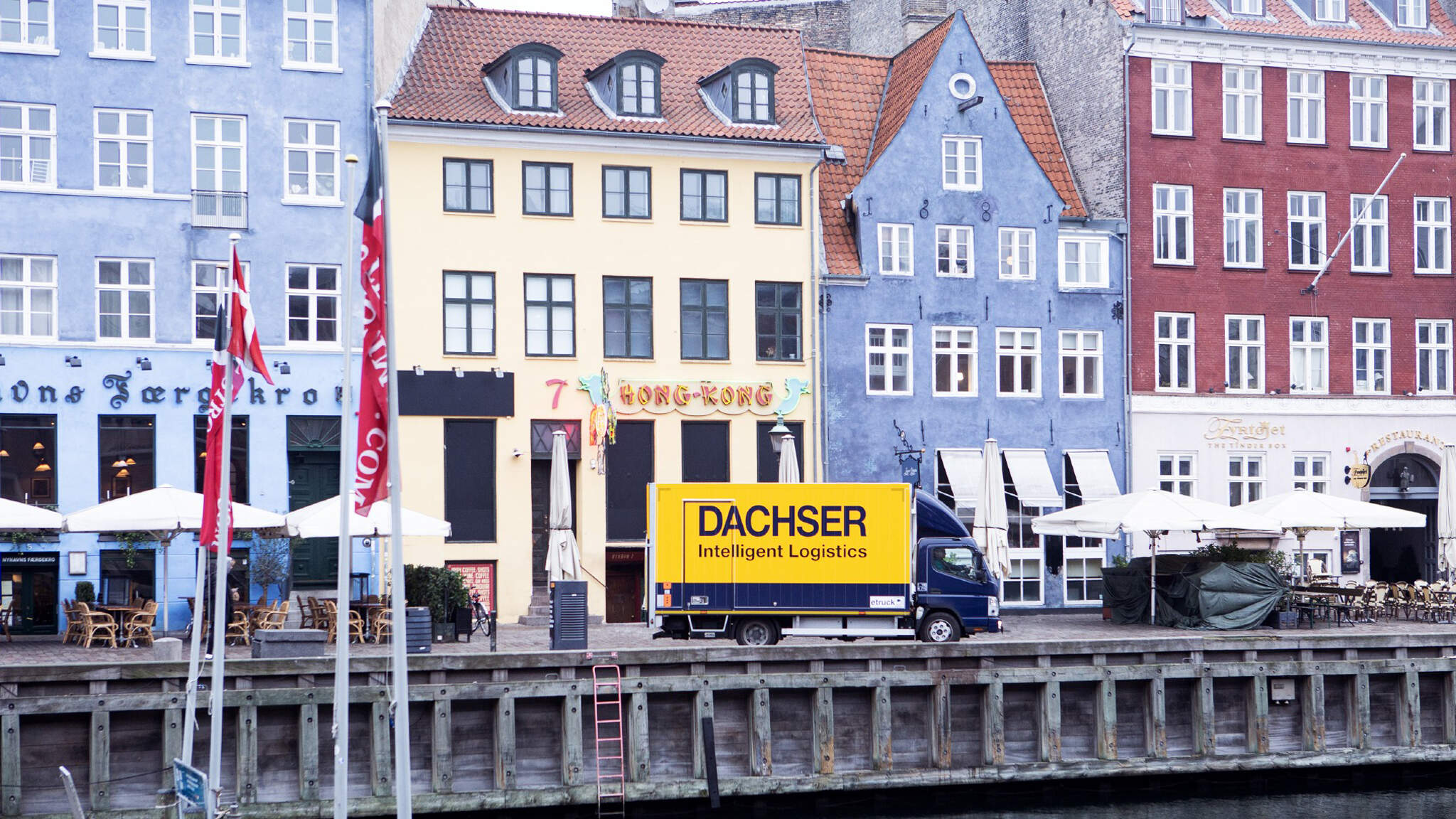
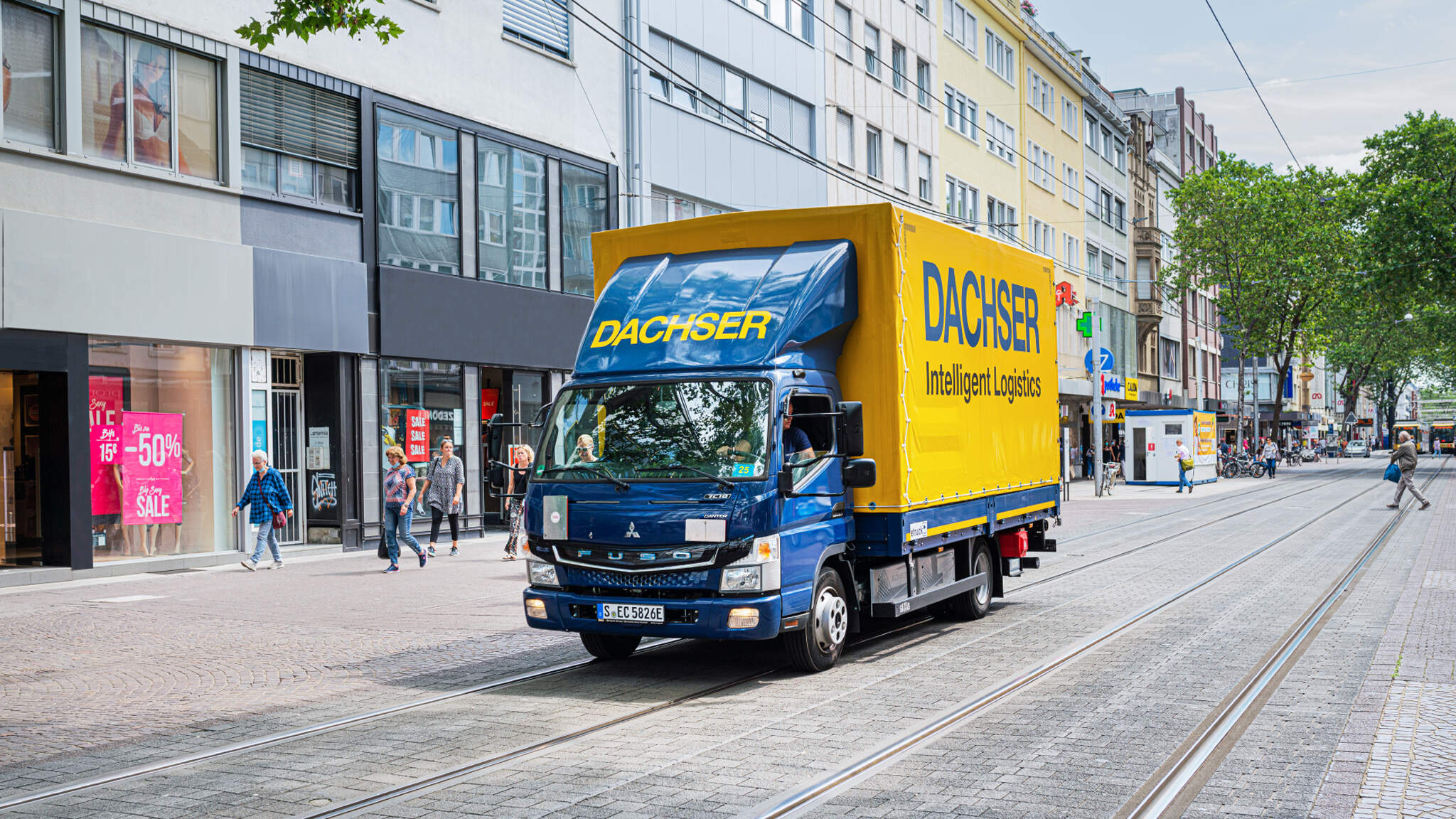
Thanks to its modular system, DACHSER Emission-Free Delivery is theoretically suitable for any European city. DACHSER Emission-Free Delivery is already available in twelve defined city-center delivery areas, namely in Berlin, Copenhagen, Dortmund, Freiburg, Madrid, Munich, Oslo, Paris, Porto, Prague, Strasbourg, and Stuttgart. The twelve city-center areas announced today will be added by the end of 2025. Using a modular system adapted to local requirements, the DACHSER branches deploy battery-electric vans and trucks as well as electrically assisted cargo bikes. The bikes are specially designed for groupage and heavy palleted goods. Depending on a location’s specific requirements, this concept also involves the use of small transit terminals—known as microhubs—near city centers. In such cases, the cargo bikes start their tours at the microhub and carry goods into busy pedestrian zones. The e-trucks in turn supply the microhubs with goods or, for parcels and pallets that are too large or too heavy for bike transport, deliver the goods directly to recipients.
“Geography, social structure, administration: each city has its own unique profile, which we take into account when planning and implementing a zero-emission delivery area,” explains Tara Li, Project Manager DACHSER Emission-Free Delivery. “At the same time, we can draw on our experience gained in twelve European cities to identify synergies and potential for optimization.”
Geography, social structure, administration: each city has its own unique profile, which we take into account when planning and implementing a zero-emission delivery area.
Tara Li, Project Manager DACHSER Emission-Free DeliveryPositive effects on the environment and for drivers
DACHSER’s city-center deliveries with zero local emissions help city administrations improve air quality and reduce traffic noise. Because the battery-electric trucks and cargo bikes emit no air pollutants, they play a major part in keeping the air clean. DACHSER purchases only electricity generated from renewable resources to charge its fleet. This brings operational greenhouse gas emissions for the last mile down to zero. It also greatly reduces noise emissions, while using cargo bikes means less truck-related congestion. Battery-electric vehicles are good news for drivers, too, who are no longer exposed to engine vibrations in the cab.
DACHSER Emission-Free Delivery supports the logistics provider’s long-term climate protection strategy. By promoting sustainable business development and focusing on process and energy efficiency, innovation, and inclusive responsibility, the family-owned company is paving the way for sustainable logistics together with its customers and partners.
DACHSER Emission-Free Delivery supports the logistics provider’s long-term climate protection strategy. By promoting sustainable business development and focusing on process and energy efficiency, innovation, and inclusive responsibility, the family-owned company is paving the way for sustainable logistics together with its customers and partners.
Bookmark article
Contact
Josh Mower
Marketing / PR
+44 16044331 75
josh.mower@dachser.com